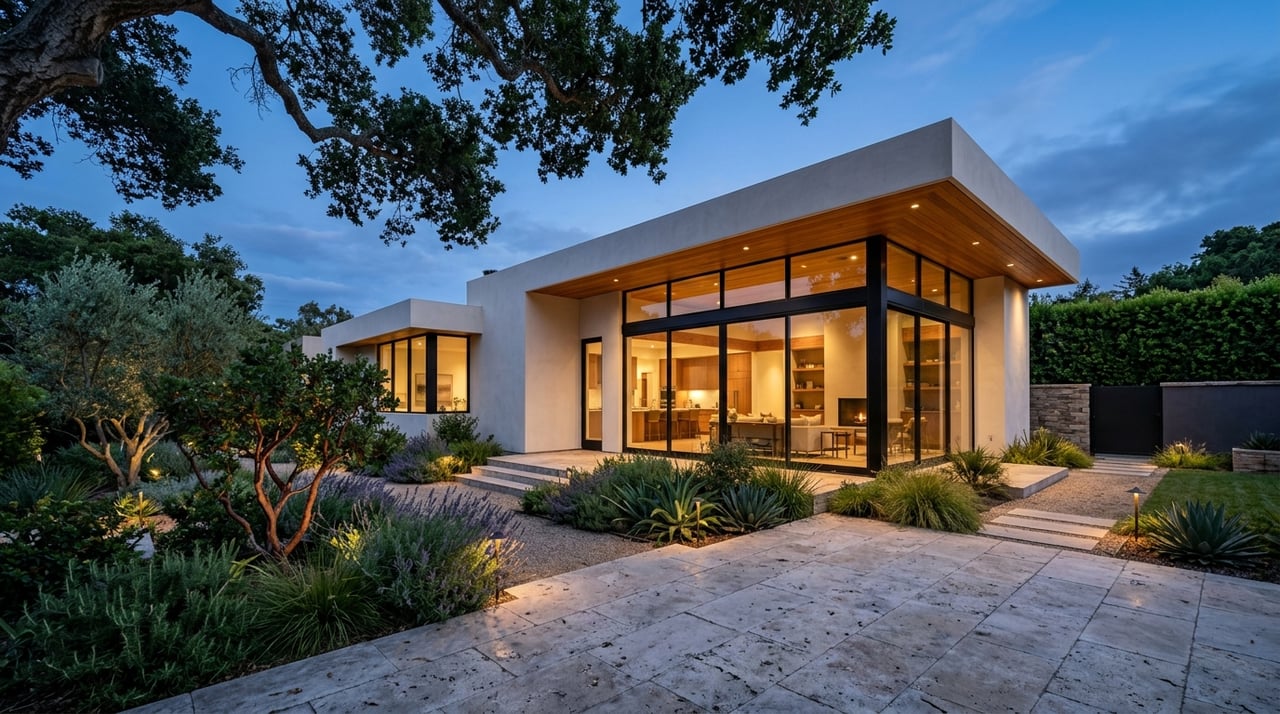
What Today’s Buyers Expect From A Palo Alto Listing
April 16, 2026
April 16, 2026
If you are thinking about selling in Palo Alto, here is the reality: buyers are judging your home long before they book a tour. In a market where homes move quickly and pricing can vary sharply by neighborhood, your listing has to do more than announce that your home is for sale. It needs to present the property clearly, answer key questions early, and give buyers confidence from the first click. Let’s dive in.
In Palo Alto, first impressions often happen on a screen, not at the front door. According to the 2025 NAR generational trends report, buyers who searched online said the most useful listing features were photos, detailed property information, floor plans, virtual tours, neighborhood information, and video.
That matters even more in a market like Palo Alto. Realtor.com’s city overview reports 102 active listings, a median list price of $2.96 million, a median 25 days on market, and homes selling at about 102% of asking on average. When buyers are moving fast, a listing that feels incomplete can lose attention just as quickly.
Today’s buyers expect polished visuals that help them understand a home before they visit. Professional photography is the baseline, but many buyers also want floor plans, video, and virtual tours that show layout, flow, and scale.
NAR found that 83% of buyers who used the internet said photos were among the most useful listing features, while 57% pointed to floor plans, 41% to virtual tours, and 29% to video. In practical terms, that means your listing should feel complete on both desktop and mobile, because many buyers begin their search on a phone or tablet.
Beautiful photos can attract attention, but they do not always explain how a home lives. A floor plan helps buyers understand bedroom placement, room connections, and whether the layout fits their daily routine.
That simple addition can make a listing more useful and more efficient. Buyers can often decide early whether the home fits their needs, which can lead to more qualified showings.
Video can do something still photography cannot: it helps buyers experience movement through the home. In Palo Alto, where architecture, design, and indoor-outdoor flow often play a major role in value, that extra context can help a property stand out.
For many sellers, this is where strategic storytelling matters. A listing should not just show rooms. It should show how the home connects, what makes it distinctive, and why the property belongs in its specific Palo Alto setting.
Buyers in Palo Alto are often comparing more than square footage. They are also comparing condition, design, and the overall care reflected in the listing presentation. A clean, well-prepared home is easier to understand and easier to imagine living in.
NAR’s 2025 profile of home staging snapshot found that 83% of buyers’ agents said staging makes it easier for buyers to visualize a property as a future home. The most commonly staged spaces were the living room, primary bedroom, and dining room.
NAR’s consumer guide to preparing to sell defines staging as cleaning a home and temporarily furnishing it so buyers can better imagine living there. That can be especially important in a design-conscious market like Palo Alto, where buyers may respond strongly to presentation quality.
The same guide recommends practical steps that also improve listing media, such as cleaning windows, carpets, walls, and light fixtures, reducing clutter, and improving curb appeal. Those simple updates can make photos stronger and help your home feel more move-in ready online.
Palo Alto is not one-size-fits-all. The City of Palo Alto residents page notes that the city has more than 30 neighborhoods, each with its own character, and the city identifies historic districts including Professorville, Ramona Street Architectural District, Green Gables, and Greenmeadow.
That means buyers are not just evaluating a house. They are evaluating the home’s architectural style, setting, and how it fits within its neighborhood context. A strong listing should explain those details clearly instead of leaving buyers to guess.
A polished listing gets attention, but transparency helps build trust. In California, buyers expect disclosures to be a meaningful part of the process, not an afterthought.
The California Department of Real Estate’s disclosure booklet explains that most sellers of one-to-four-unit residential property must provide a Real Estate Transfer Disclosure Statement. That statement includes environmental hazards the seller knows about and material facts that may affect value or desirability.
California also requires certain natural hazard disclosures where applicable, making the disclosure package broader than a simple condition summary. You can review the underlying requirements in the California Legislative Information code section.
For sellers, the takeaway is simple: buyers want clarity early. A listing that is paired with organized disclosures and a transparent presentation can reduce uncertainty and help serious buyers move forward with more confidence.
NAR’s consumer guide to home inspections notes that some sellers choose a pre-sale inspection before listing. This can help identify issues upfront, guide repair decisions, and prepare for negotiation.
Even if you plan to sell as-is, buyers still expect honest information. In fact, when repairs are not part of the strategy, upfront disclosure becomes even more important because buyers are relying on the listing package to understand the opportunity and the risk.
A home listing in Palo Alto should not stop at the property line. Buyers also want relevant context about the surrounding area, especially when comparing different parts of the city.
NAR found that 35% of online buyers considered neighborhood information one of the most useful listing features. That fits Palo Alto well, because local variation is a big part of how buyers compare value.
Citywide averages are useful, but they do not tell the whole story. Realtor.com neighborhood data shows how dramatically pricing can differ within Palo Alto, with median listing prices of $10.839 million in Old Palo Alto, $2.328 million in Midtown Palo Alto, and $3.7125 million in Downtown North.
That spread is a reminder that buyers pay attention to micro-market details. A strong listing should explain the home’s setting with clear, factual context, such as access to parks, libraries, transportation, commercial districts, and other public amenities noted on the City of Palo Alto residents page.
Even the best presentation cannot overcome pricing that misses the market. Buyers in Palo Alto are informed, and they are comparing condition, location, and listing quality side by side.
NAR’s 2025 seller data found that 36% of sellers reduced their asking price at least once, while the median final sale price for recently sold homes was 100% of the final listing price. That is a useful reminder that pricing works best when it reflects the actual package buyers see, including preparation, disclosures, and the specific neighborhood position.
In a market where homes can move quickly, your first listing launch matters. If the photos are weak, the details are thin, or pricing does not align with the home’s condition and submarket, you may lose early momentum.
By contrast, a strong launch gives buyers what they are looking for upfront: clear visuals, useful facts, neighborhood context, and confidence in the overall presentation. In Palo Alto, that level of completeness is often what separates a listing that gets immediate traction from one that has to catch up later.
If you are preparing to sell in Palo Alto, today’s buyers are telling you exactly what they want. They want a listing that looks polished, explains the home clearly, provides meaningful disclosure information, and places the property in the right neighborhood context.
That is why listing strategy matters as much as listing exposure. When your home is presented with strong storytelling, professional media, thoughtful prep, and a well-organized launch plan, you give buyers more reasons to engage and fewer reasons to hesitate.
If you are planning a move and want a strategy built around presentation, pricing, and a smoother selling process, connect with David Kim Group. Their marketing-first approach helps Palo Alto sellers launch with clarity, confidence, and a plan.


Market Update

Partner with our dynamic team to unlock the full potential of your real estate endeavors in Silicon Valley. With our tailored approach and in-depth market knowledge, we'll ensure a seamless and extraordinary client experience.
Connect With Our Team to Learn More

19900 Stevens Creek Blvd, #100 Cupertino, CA 95014 David Kim | CA DRE# 01527235 Keller Williams Thrive | CA DRE# 02177478