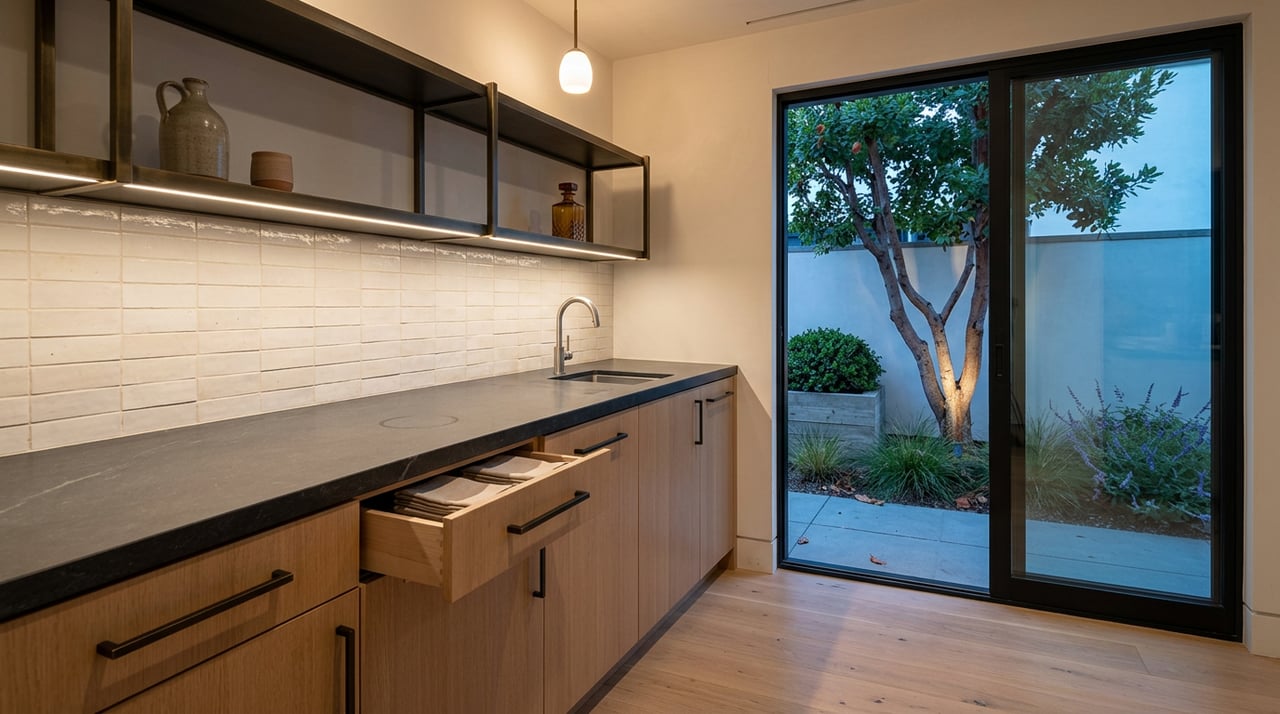
Thursdays on Cal Ave: How Palo Alto's Car-Free Promenade Rewrote Summer 2026
July 16, 2026
July 16, 2026
For most of the last four years, California Avenue was a lunchtime street. Cars had been evicted in June 2020, tents had gone up, and the block between El Camino and Birch settled into a pleasant but oddly quiet second act: coffee in the morning, a busy Sunday farmers market, and a slow evening drift toward Terun or Joanie's before people scattered home. If you lived a few blocks off Cal Ave, the promenade was something you passed through, not something you planned around.
That changed this spring, and July is the first month where the change is fully visible.
On May 28, the city launched Thursday Live, a free concert series that runs on a monthly cadence through September. The inaugural night had Maico Campilongo of Terun playing on the street outside his own restaurant, which is exactly the tell you want: this isn't a touring festival dropped into a plaza, it's the block's own operators programming their own street. The next installment lands July 30 at 5 p.m., staged directly on California Avenue rather than pushed into an adjacent lot.
The concert series arrived alongside a discussion the council has been circling for a year about whether Cal Ave should feel like a party zone at all. In a June briefing, Council member Ed Lauing argued that Cal Ave is now a pedestrian zone and that pedestrians do not want to get hit, which is the polite way of saying the city has been forced to pick a personality for the street. The June 15 approval of the 2026 Bicycle and Pedestrian Master Plan settled part of that argument by dropping the earlier proposal for a two-way bike lane down the middle of the promenade and replacing it with thermoplastic bands designed to slow cyclists to a crawl. The upshot for residents is small but real: the street now behaves the way you'd expect a promenade to behave after 5 p.m.
None of this would matter if the food on the block hadn't turned over at the same time. It has. The wave of 2026 openings on and around Cal Ave and downtown is the largest in years, and it is finally weighted toward dinner rather than the fast-casual lunch crowd that defined the corridor pre-pandemic.
Read the list against what closed. Son & Garden and Sushirrito are gone. Pastis has been gone for four years. What replaces them is heavier on evening formats, wine programs, and full sit-down service. That shift is why the parklets suddenly matter.
In June the city adopted new parklet guidelines that the largest operators on Cal Ave, iTalico, Terun, and Zareen's among them, publicly backed. Sahlik Khan, head of operations at Zareen's, wrote to the council that foot traffic has increased tremendously since the closure, and that visitors are lingering longer and treating the district as a destination rather than a pass-through. That is a specific claim from an operator with a Murphy Street expansion opening in Sunnyvale next, so it is worth taking seriously.
"More people are spending time on California Avenue, lingering longer, and enjoying the district as a destination rather than simply passing through." — Sahlik Khan, Zareen's, in a letter to the Palo Alto City Council
The under-the-hood change is that the parklets are shifting from the pandemic-era water-barrel-and-tent aesthetic to permanent street furniture with actual design review, and the city is trying to reconcile that with the outdoor dining footprint. The city's own year-end report was blunt that gas main conflicts and public safety questions have kept the final parklet program from being locked in on schedule. In practice for a resident this summer, it means the block still has a slightly improvised quality to it — some parklets are polished, some are holdovers — but the improvisation now cuts in favor of nightlife rather than against it.
The other move worth tracking is Mimosa Lane. The proposal at 414 California, on the former Bank of the West site between the Cobblery and Country Sun, would turn Mimosa Lane into a second pedestrian street with dining. Whether or not the six-story building itself is approved, the direction of travel is toward more car-free surface area, not less.
Cal Ave doesn't run on Thursdays alone, and the interesting move is pairing a promenade dinner with the rest of the city's summer programming instead of treating them as separate weekends.
The specific bet worth making this summer is a Thursday night on Cal Ave that starts at Rikyu for a sando and matcha before the crowd arrives, drifts down the block to whichever parklet has music spilling out of it, and ends at The Rendezvous with escargot and one of the 120 or so French labels on the list. That routine did not exist in July 2025. It exists in July 2026 because a car closure, a concert series, a bike plan, and roughly a dozen new operators finally landed in the same season. The residents who figure that out first get the block before the rest of the Peninsula does.
If you're weighing what these changes mean for the value of a home walkable to California Avenue, or if you're thinking about how a neighborhood's evening character factors into a longer-term move on the Peninsula, the David Kim Group is happy to talk it through. Schedule a Consultation when you're ready.

Market Update
Partner with our dynamic team to unlock the full potential of your real estate endeavors in Silicon Valley. With our tailored approach and in-depth market knowledge, we'll ensure a seamless and extraordinary client experience.
Connect With Our Team to Learn More
19900 Stevens Creek Blvd, #100 Cupertino, CA 95014 David Kim | CA DRE# 01527235 Keller Williams Thrive | CA DRE# 02177478